17.11.06

Balkan??

What is definitively Balkan? Cheese? The spongy, white kind that is sharp as it is flavorless? On that train of thought, did falafel form its scrumptious scrotum-like balls in Turkey before Lebanon?

Regionalism is a vainglorious inquiry.

Really. Is there a defined literature of the Pacific NW or rap genre in the Mid-West?

Balkan attribution is equally ambiguous. For an area the size of Minnesota-state, how could it cause the world so much grief and yet be so unknown? And for good measure, at the cost of billions of dollars in international cooperation--albeit reticent and ineffectual—why do we not understand its existence?

There are two signatory dates in history.

For Serbs: the Battle of Kosovo in 1389, which was lost at the hands of the Turks and thereby ended the short reign of the Kingdom of Serbia for the Ottoman Empire.

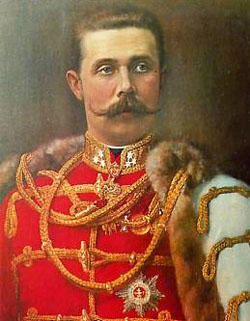
For Westerners, it is 1914, when Archduke Franz Ferdinand was assassinated in Sarajevo by a Serbian terrorist thus crumbling the Austro-Hungarian borders and beginning the drum roll for WWI.

Proportionately, there are two histories written to this day. It lapses throughout history, entering all spheres, even space!

For Westerners, Neil Armstrong was the first man on the moon.
For Serbs, a dog or a Soviet was the first man in space/moon.

We are living very different histories, indeed

For a curveball, it is not unordinary as much as dubious that the latest Hollywood blockbuster, The Sentinel, starring our tired hero, Michael Douglas, is dueling with a Serbian assassin…


The Kingdom

Returning to the Battle of Kosovo, which was elucidated in prior blogs, not only did the Turks bring pita and an Arabesque nomenclature; they brought Islam. The Kingdom of Serbia pales to the reign of the Ottoman lasting half a millennium (1389-1912). But despite this, the notion of Serbian greatness in its monarchial epoch has still been upheld to this day.

All national myths survive in poetry and epics rested on the backs of scholars, philosophers and an occasional nobel laureate. There have been many novelists and poets alike who have taken up the Serbian plight in sweeping tragedies. It is worth jumping ahead in time and noting that perhaps the most revered Serbian novelist,
Dobrica Cosic, would later would become the President of Yugoslavia. Ironically, it was his works that not only elicited the desire to romanticise the old kingdom, but would later inspire the attempt at this resurrection.

No one other than Slobodan Milosevic, the former President of Serbia, would strategically appoint Cosic to curry favor from home when his cards were down. In essence, Cosic created a monster/monstrosity, and upon this realisation, this aged poet would eventually turn on Milosevic…

After Franz Ferdinand...


When President Wilson took to his Fourteen Points after WWI, he simply decided to take the crayon and redraw the map. It was good in theory to apply nation-states, but when in an ethnic mélange say, New York City, the lines aren’t so easily drawn. The differences among South Slavs are in dialect, names and religion*. Accordingly, Croat Catholics, Croat-Serbs of whom are Orthodox, and Bosnian Muslims known as Bosniaks.

This posed to be a little more problematic than what meets the eye. Quite literally, there are hardly any distinguishing features of South Slavs. One could assume raven hair and sharp features as Serbian, and Aryan features as Slovenian, but intermarriages and chromosome conjugations keep you guessing.

Archduke Ferdinand, not one in the same as the celeb-boy band


For the sake of cohesion, these internal differences were continually subsumed. Suffice to say, the area including the reclaimed territories lost to the former Austro-Hungarian were redrawn and renamed to “the Kingdom of Serbs, Croats and Slovenes.”

Croatians didn’t take to the imposing Serbian rule so delicately. Their anointment was Catholic Serbs. Then you had, Alpine Serbs, Slovene Serbs, etc. to denote that all Yugoslavs descended from Serbia. To add to that profile, the language was Serbian.

Some thirty years later, it took a Croatian terrorist this time, to kill the king and end this attempt at unification. Five years later, WWII began.

Then, the differences were attacked...


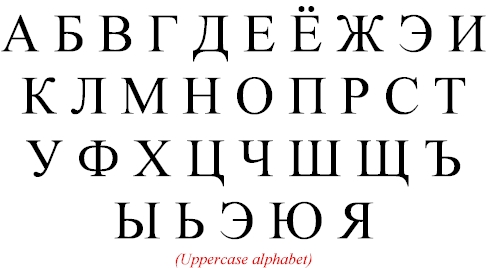
*It should be added another major difference is the script. I prepared to be lost here, but not lost with a map. Serbs write in Cyrillic, the Russian font. The rest of the Balkan region writes in, Latin as I do.

10.11.06

In the news...


The region, well, Serbia has been getting some ink lately. Since 2000, marking the end of Slobodan Milosevic's reign, Serbia's constitution has been in need of a face lift. It is no longer the Yugo Republic and it no longer owns Montenegro as of late, with their indepedence that happened without so much of a whimper. So timely it would be that a referendum was called to update the constitution right before Kosovo's expected independence.


Kosovo is the holy land for Serbia and that of Ethnic Albanians, the latter population makes up 90 percent of the region, while most Serbians have fled for safer passages in the last decade of warring. The stalwart Serbian population therein is estimated to be 200,000.


I have a couple of colleagues who studied at the single University in Kosovo. The language of instruction is Serbian, which is not the native language of Ethnic Albanians. According to my friend, Svetlana, who is Serbian, the city is not easy to inhabit. She could only walk down lanes that had bumpers lining them. Over the course of four years, she did not have one Kosovarian friend.


Best ref: http://www.economist.com/agenda/displaystory.cfm?story_id=8098850


Since the end of the Kosovo-Serbian war in 1999, the U.N. principally governs the region. This is at a price of some one plus billion per month. The negotiating bodies are expected to give Kosovo its expected impasse in November. GW also anticipates Kosovo's independence before he leaves office. The only countries that disapprove is Mother Russia where Putin fears Chechyna and other states gaining some more inspiration.


Serbs have proved that Kosovo will not be given up without a fight. It remains to be in their constitution, as now written, "an integral part of Serbia..."


By a narrow margin, voters did approve of the referendum which in effect, keeps Kosovo on the Serbian Constitution. To many, this looks like more Serbian defiance, and would only further delay their entry to the E.U. even though politicians promised otherwise.


What most of the media overlooked, is that there is a very important strategy in place. A confusing one. The vote will delay Kosovo's indepedence, but it will allow the current government to fend off radical parites from picking up voters and thus creating serious instability in the region IF Kosovo was to get its steadfast independence.


Once again, reading between the margins. We can expect on an implicit level that Kosovo will get its wish come Christmas, however you will have to read the fine print.


What this means is that if Kosovo gets its independence as Montenegro has, then why can't the Republic of Srpska? Thus putting this town back on the firing line-- again...


9.11.06

Part II. The Balkan Blog


8.11.06

What is my bone to pick with the Balkans?


Long before my first introduction to Slavic culture in the Czech Republic, I have been interested in the Balkan region, perhaps it is a fetish of so many foreigners—to see how multi-ethnic societies function amidst cultural clashes and religious clamor in their fragile yet proud ways to self- preserve under one nation. Bosnia is precisely this place.

It appears to be a pattern that I take to the more haphazard parts of the world, but I do so with discretion, and I would never be guided by vainglory. I have no aspirations for being a war correspondent. Though I believe in every state’s right to independence from colonial empire, “uti possedetis,” and thus favor the underdog; the romance of an overnight junta is one in the same rush as a one nightstand.

I have absolutely no fascination for war. None whatsoever. I am interested in the recovery of regions, which is rather presumptuous. It would be more accurate to say I am steadfastly observing the transitions; the more ambiguous periods in which things are not so defined. This is, in so many words, a euphemism for chaos, but contrary to how it may appear—corruption, black markets, and bureaucracy; the chaos is not in fact on its face, but the basis for former socialist or totalitarian states to survive in, as they at best, tip their hat to the harbinger of democracy and capitalism.

6.11.06

Great philosophy et al, but what the f*#$% am I doing in Bosnia? Do I wear a helmet? Or a funny hat? Do I ride an Ass or a Schwinn?

Being the savvy media junkies that we are, Nick and I fancied the idea of working and collaborating in this region. So by a means of teaching English, we took our three-trick ponies and saddled into the Balkan sunset. We were headed for the splendor that is Sarajevo, but by default, we wound up in the second largest city of BiH, Banja Luka. In fact, it is a small town here, one that is stripped of any fragrance of culture, for reasons of the Orthodox Church and a grid locked economy—the latter is a penalty from the war.


So, why did we salvage our souls here?

Firstly because we were presented with an irrefutable offer to teach at a well endowed school, and are supported in leading media workshops with teenagers. Nick is teaching kids how to shoot and make videos; I am attempting to supplant kids with the seeds of self-publishing in the craft of Zine-making.

The second reason why we stayed on, and most importantly, is that our contributions are of use here. Whereas Sarajevo has always been a city of artistic merit and self-sufficiency, Banja Luka is entirely cut off from the success of the Capital. There is no direct highway between the two…
Finally, apart from their “burgeoning” white water rafting tours, few visitors make it out here, unless they are working in governmental bodies. From this small town, there is a lot to tell—both histrionically of what results from war and some foreshadowing of the uncertain future...

5.11.06

Where It Begins...

I write from a very significant place, the Kastel (“castle”), which is a basis for the historical events that follow. The Kastel, which is not of any grandeur like those in fairytale-Prague, is modest in its size and location. It housed the imperial ruler of the day, which began with the Celts, followed by the Romans, and then most prescient, the Turks during the Ottoman Empire, the latter of which would create the truly internal rift that remains in this valley today…

Before I digress, I should begin to tell, in a manner of place, where exactly I am and why. I write from the Balkans, the former Yugoslavia. More specifically, I live in Bosnia-Herzegovina. (By now, some less than flattering associations probably come to mind.) Still to be more precise, I live in Serbska, arguably an independent state in the Federation of BiH. As you can deduce, location is one complexity in the lot of Balkan Babel...

3.11.06

On the Balkan Identity (a non-sequitir)

The second attribute I need to address, beyond identifying one's location and place (or displacement), is the subject of ethnicity, which is loosely used as one in the same of one’s ancestral origins.

Here in the Republic of Serbska, much to the ire of the purist, one’s identity is involved, leaning on hyphenations. Many Serbian immigrants who lived all over Yugoslavia do not acknowledge the breaking up of the Republic, and subsequent independent statehoods, so they hold on to being Serbian more than anything else. Therefore, a Balkan identity never did exist.


This defiance of statehood is particularly strong in Bosnia, where you have a mixed population. Here in the Republic of Serpska, is the haven and possibly the only place for Bosnian-Serbs. Additionally, a minority of Croatian-Serbs live here and in the Hercegovina region of the Federation, of whom were refugees of the war in Croatia. What these two Serbian immigrant populations have in common is their faith, which hails from the Orthodox Church that thrived in the Kingdom of Serbia and the Byzantine Era under the patriarch of Constantinople.

Since the Ottomans took over in the 14th Century, the Orthodox began its many wars including the most notable one versus the Turks in The Field of Kosovo, the first Balkan War in 1912, then in WWI against Austro-Hungarian rule, and WWII against German occupation. The battles heretofor remain to be fought for the Kingdom of Heaven, which is boundless.

In the words of Serbian Patriarch Danilo III, (circa 1393): 'It is better to choose "death with honor and sacrifice, than life in shame..."

So with this deeply rooted history in mind, Serbians of every stripe are “Serb Orthodox,” and that is the little box they would check at the poll. Therefore, the only population that identifies as "Bosnian" are Muslims, otherwise knowns as Bosniaks. And to be frank, I would also include the humble slice of liberal-leaning people that declare themselves Bosnian, though this minority is so small that you couldn't see it on a poll no less a petri dish. Much to the chagrin of the international community including the European Commission, NATO, the UN and so forth…

Serbian blood is thick.

The Orthodox Church

As it would happen, again, by default, I live in the cradle of the Orthodoxy here in Banja Luka. An aerial view of Serbska would look agrarian, some electricity posts, some crosses rivaling the seven-story Soviet apartment monoliths, and no buildings to speak of because there is no economy. As said before, this is the ghetto for those people who have know place else to be and I should add, can't go anywhere else.

Apart from the highly overrated, natural beauty, there is a whole lot of nothing here, which spells trouble for teens. Truth be known, the natural beauty in Serbska exists simply because it wasn’t ripped apart from the ground up by bombshells...

As history tells, people who are marginalized or oppressed will often organize around victimization. The Orthodox Church did suffer through some great vicissitudes, and from this collective suffering, the followers' remorse strengthened to the extent that to be a Serbian is to be sacred. If this sacred nature is not neutralized or integrated into an open society, it will only be met by zealotry. History evidenced this in: Hitler’s Germany, Liberia, Rwanda, Afghanistan, and fundamentalist groups in Britain, Pakistan and East Asia.

In many cases, the church protects this population as much as a prophet or patriarch can, and in due time, the state gathers its flailing constituent parties for reasons of their own accords, flips the switch, creates an enemy, who purports some kind of threat, and the propaganda begins pumping like a pulp mill, relentless, into the atmosphere.

Thus together, the Orthodox Church and the Serbian State cultivated and used this collective victimisation stemming from the Ottoman to WWII to NATO, Kosovo and the hereafter, to create a sense of deserved retribution. More importantly, the form in which this duty was carried out to resurrect the Kingdom of Serbia, if you will, is boundless and knows no Geneva Codes. The cause at all costs is righteous, however blind-sighted.

This includes the movement of Bosnia-Serbs’ illegal creation of an autonomous state in the Federation, which was done out of resistance to Bosnia's independence from Yugoslavia. This unacknowledged state called the Republic of Serbska was carved out and in the process, Bosnian Serbs systemically terrorised Bosniaks in the region. Outside the state, they destroyed any semblance of Bosniak culture including historic buildings, libraries, museums and so forth during their occupation of Sarajevo from 1991-1995.

To hit it home, the only blowing up here in the cradle of Banja Luka was 16 Mosques and some 5 Catholic churches, all else is left unharmed. Of the 30,000 Muslims that once lived here, there are now less than 9,000. During the war, they were harassed, raped and lead to work camps or marched out of town.

Not the most charming of towns...