The Hague-- not a popular Spring Break destination
Now that Serbia has stepped down from the defense side of the World Court hearing on genocide in Bosnia, Serbia has not left the building.
Rising to the defense just in March, stands Kosovo's former Prime Minister, who resigned after his indictment for war crimes committed against Serbs during the 1998-99 war.
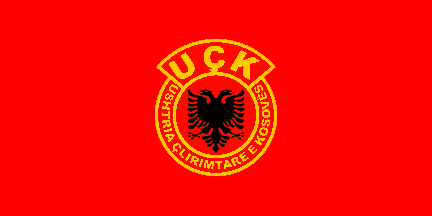
Ramush Haradinaj, was the commander general of the Kosovo Liberation Army, serving the majority of ethnic Albanians that make up the region. The KLA is historically the strongest paramilitary unit in the world. Why? Because it popped up overnight and successfully overwrought Serb and Yugoslavian occupation (with the assistance of NATO.)
Considering the precarious nature of Kosovo's impending sovereignty, it is unlikely that a verdict will be reached in Haradinaj's case, until later in the year, provided this state establishes stability.
Kosovo is the heartland for Serbs, and in one's hearts, it will forever be. During the Serbian rule from 1990-96 under Milosevic, Kosovo became a police-state. In a population makeup of percent ethnic Albanian-to-less than 20 percent, Serbian, the state tightly controlled all institutions in an apartheid-designed governance.
*Interesting side-note, as part of Milosevic's plan to beef up Kosovo and keep Serb refugees out of Serbia, he sent Croatian and Bosnian Serb refugees from the war to Kosovo. This way, it would fill the Serbian population that was notwithstanding the ethnic Albanian majority. All refugees seeking university, were also forced to attend the one university in Kosovo.

This denial of job and education opportunities, not to mention the distinction of cultures, including religion and language, created the growing insurgency. After the 1999 NATO airstrikes, Serbia was defeated. Close to a million ethnic Albanians who fled as refugees, returned over time. While as a result, some 250,000 Serb refugees fled. Not what the UN or NATO had hoped for. Casualties are still being speculated as mass graves are unturned. It is estimated that 10,000 ethnic Albanians were killed. Some 1,000 Serbs and Romany were also killed. Less than ten percent of the population in Kosovo today is Serbian. Currently, around here, there are fundraisers to give blankets and supplies to those remaining Serbs in Kosovo, whose existence still is precarious at best. The United Nations has administered an interim government thereafter and continues to in these final days before relinquishing it to the ethnic Albanians.
Despite knowing that Kosovo will in fact become an independent state, Serbs and possibly the state of Serbia, will refuse to recognise it as such. The current president of Serbia, a Democrat, has presented himself as a liberal, including issuing a public apology to Bosnia for the verdict on Srebrenica, a precedent in their history, but his parliament and nationalist Prime Minister are divided on Kosovo, which is a very dicey topic to bring up in any classroom, bar or street round here...
Rising to the defense just in March, stands Kosovo's former Prime Minister, who resigned after his indictment for war crimes committed against Serbs during the 1998-99 war.
Ramush Haradinaj, was the commander general of the Kosovo Liberation Army, serving the majority of ethnic Albanians that make up the region. The KLA is historically the strongest paramilitary unit in the world. Why? Because it popped up overnight and successfully overwrought Serb and Yugoslavian occupation (with the assistance of NATO.)
Considering the precarious nature of Kosovo's impending sovereignty, it is unlikely that a verdict will be reached in Haradinaj's case, until later in the year, provided this state establishes stability.
Kosovo is the heartland for Serbs, and in one's hearts, it will forever be. During the Serbian rule from 1990-96 under Milosevic, Kosovo became a police-state. In a population makeup of percent ethnic Albanian-to-less than 20 percent, Serbian, the state tightly controlled all institutions in an apartheid-designed governance.
*Interesting side-note, as part of Milosevic's plan to beef up Kosovo and keep Serb refugees out of Serbia, he sent Croatian and Bosnian Serb refugees from the war to Kosovo. This way, it would fill the Serbian population that was notwithstanding the ethnic Albanian majority. All refugees seeking university, were also forced to attend the one university in Kosovo.

This denial of job and education opportunities, not to mention the distinction of cultures, including religion and language, created the growing insurgency. After the 1999 NATO airstrikes, Serbia was defeated. Close to a million ethnic Albanians who fled as refugees, returned over time. While as a result, some 250,000 Serb refugees fled. Not what the UN or NATO had hoped for. Casualties are still being speculated as mass graves are unturned. It is estimated that 10,000 ethnic Albanians were killed. Some 1,000 Serbs and Romany were also killed. Less than ten percent of the population in Kosovo today is Serbian. Currently, around here, there are fundraisers to give blankets and supplies to those remaining Serbs in Kosovo, whose existence still is precarious at best. The United Nations has administered an interim government thereafter and continues to in these final days before relinquishing it to the ethnic Albanians.
Despite knowing that Kosovo will in fact become an independent state, Serbs and possibly the state of Serbia, will refuse to recognise it as such. The current president of Serbia, a Democrat, has presented himself as a liberal, including issuing a public apology to Bosnia for the verdict on Srebrenica, a precedent in their history, but his parliament and nationalist Prime Minister are divided on Kosovo, which is a very dicey topic to bring up in any classroom, bar or street round here...
posted by kc at 15:18


<< Home